Cart
0
On this page
By Manny Singh, Founder, RamanRasa
I import cinnamon for a living, so I get this question a lot: is cinnamon preserved? Is there something in the bag keeping it fresh?
Short answer: no — and yes.
No, good cinnamon doesn't need a chemical preservative sprayed on it or mixed into it. Yes, it is absolutely preserved — by one of the oldest food technologies there is: taking the water out, carefully, and then keeping the air, heat, light, and moisture away from it.
That's the whole story. Let me walk you through it, because once you see it, you'll never look at a cheap bag of cinnamon the same way again.
What you're actually preserving
Cinnamon's flavor lives in its oil. Cinnamon bark carries roughly 3–4% oil, and in top-grade bark oil, cinnamaldehyde — the compound that gives cinnamon its warm, spicy taste and smell — runs above 60%.[1] That oil is volatile. It evaporates. It breaks down with heat, light, air, and moisture.
So "preserving cinnamon" really means one thing: protecting that oil from the tree to your kitchen. Every step below exists for that reason.
Step 1: The harvest is timed, not rushed
Ceylon cinnamon is harvested in the rainy season — roughly May to August in Sri Lanka — because increased sap flow makes the bark peel cleanly off the wood.[2] Peel at the wrong time and you tear the bark, damage the layers, and start losing quality before the cinnamon even leaves the farm.
Step 2: It's rolled by hand, then shade-dried
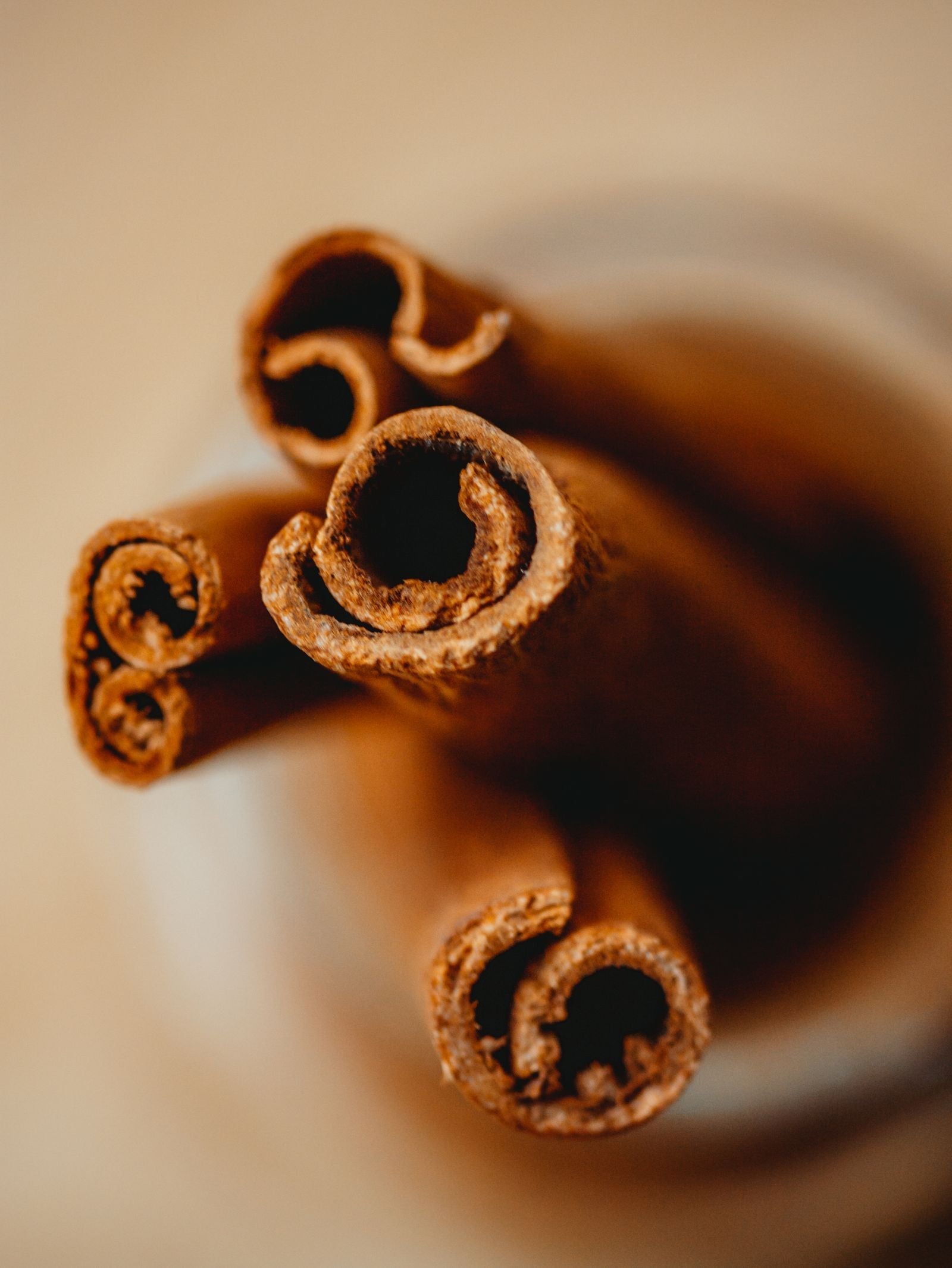
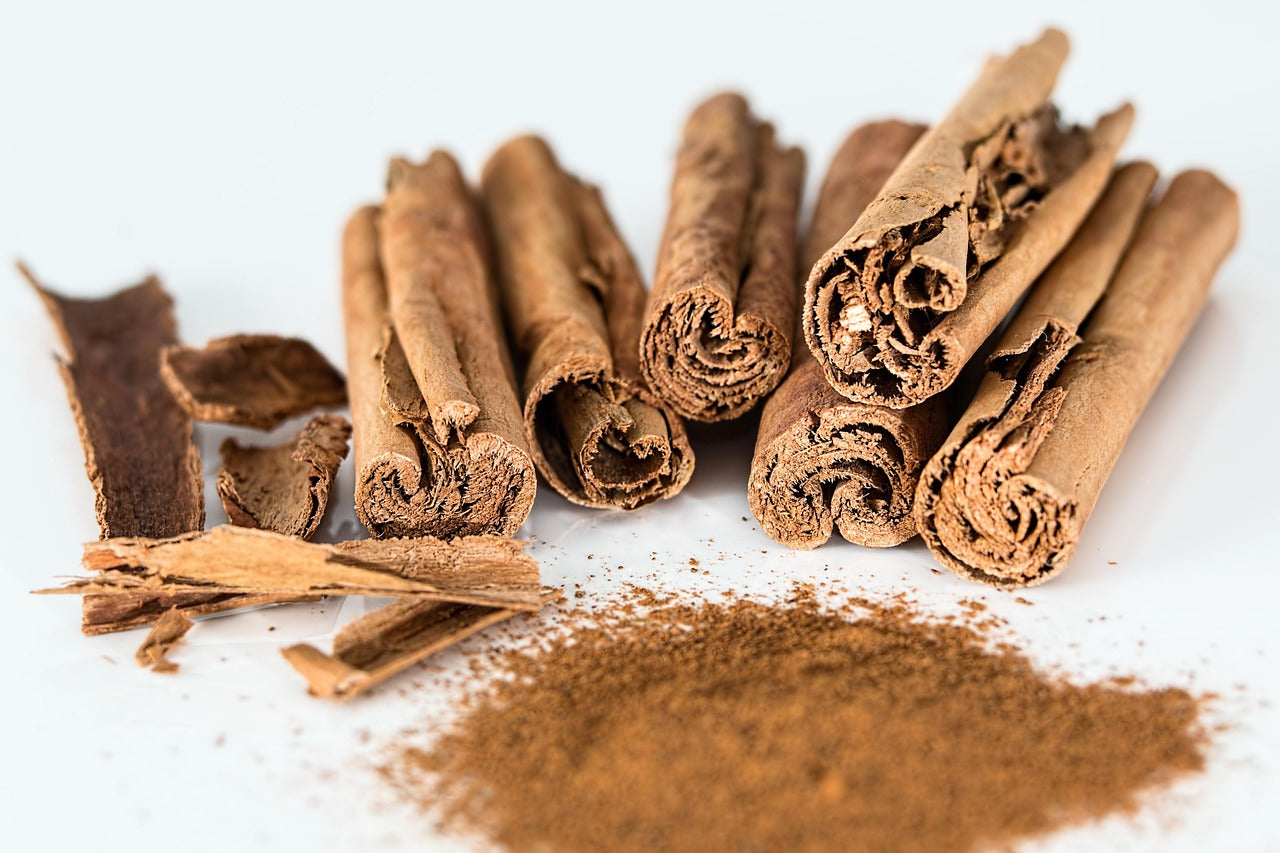
The inner bark is peeled in long strips, shade-dried for 2–3 hours until it coils inward and turns golden brown, then layered and filled with smaller bark pieces into 42-inch quills.[2] Sri Lanka's Department of Cinnamon Development describes the same construction: inner bark pieces joined together, filled with smaller pieces of the same cinnamon, and left to dry.[1]
Notice what's not happening: no blast of direct sun, no high heat. Shade and patience. Heat is the enemy of the oil.
Step 3: Slow indoor drying — this is the preservation step
The rolled quills are pressed by hand and dried indoors on coir rope racks for 4–7 days.[2] That slow drying is what makes cinnamon shelf-stable. The Codex Alimentarius code of practice for spices — the international hygiene standard — is blunt about why it matters: product must be dried to a safe moisture level before packing, to prevent spores from germinating and growing, and drying material should be turned frequently to limit mould growth.[3]
Dry bark doesn't feed mould. Dry bark doesn't rot. That's not a chemical trick — that's just physics, done right.
Step 4: Grading is quality control, not paperwork
Dried quills are graded by diameter, thickness, uniformity, color, and foxing, then baled for transport.[2] The finest grade, Alba, is just 6 mm across — 45 of those 42-inch quills weigh a single kilogram.[1] Grading sounds bureaucratic until you realize what it is: somebody looked at every quill and threw the weak ones out of the top lots.
Step 5: The modern layer — microbial treatment, and an honest word about sulphur
Traditional drying gets cinnamon stable. Modern export adds a safety step: Codex notes that some spices are treated to reduce microbial contamination, typically by steam treatment.[3]
And since I believe in showing the whole picture, here's the part most brands won't mention: parts of the wider cinnamon industry use sulphur fumigation — Sri Lanka's own cinnamon research center was still publishing studies on its effect on quill quality and shelf life in 2024.[4] I'm not saying every bag out there is fumigated. I'm saying it's a real practice in conventional supply chains — and it's exactly why "ask for the paper" beats "trust the label." If a seller can't tell you how their cinnamon was handled, that's your answer.
Step 6: Storage decides what survives
Once it's dried and packed, the enemies are moisture, heat, and time. Codex calls for spices to be stored on raised platforms in a cool, dry place, with contact with water or moisture minimized.[3]
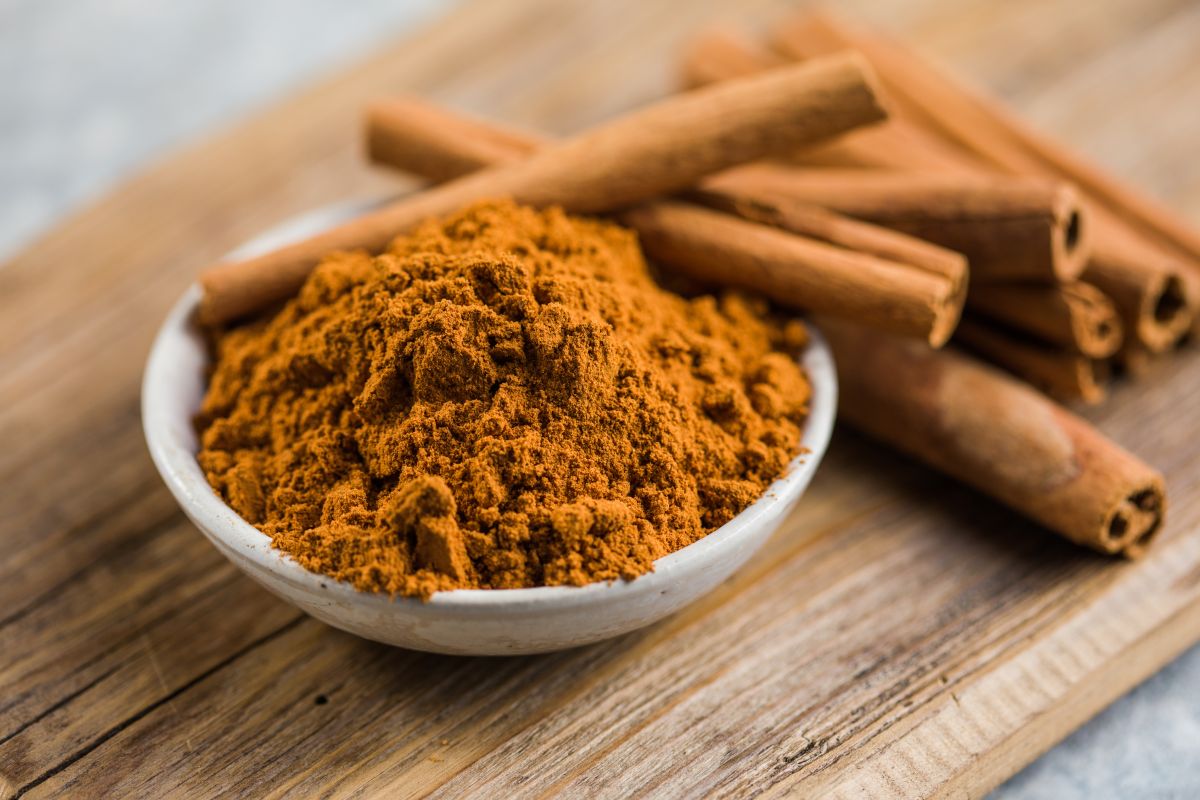
The same rules apply in your kitchen. USDA FoodKeeper guidance, as adapted by Kansas State University Extension, gives whole spices 3–4 years and ground spices 2–3 years in the pantry — stored airtight, dry, away from sunlight and heat, and judged by aroma: if it's faded, replace it.[5] Ground cinnamon fades faster than sticks for a simple reason: grinding opens up surface area, and surface area is where the oil escapes. Whole quills protect their oil. Powder can't.
So if your cinnamon has been sitting open above the stove for two years, it's not dangerous — it's just tired. What you're tasting is cinnamon that lost the oil it was preserved for.
How we do it at RamanRasa
Our cinnamon is single-origin Ceylon — Cinnamomum verum from Sri Lanka, the species whose bark oil is built around cinnamaldehyde and which carries only trace coumarin, around 0.004%.[6] It's processed, dried, and packed at a certified facility in Sri Lanka, and our standing rule is simple: the testing reports come before the shipment, not after it. We run our own testing on the US side too.
Because that's what preservation really is. Not a chemical. Not a claim on a bag. A chain — harvest timing, hand rolling, slow drying, grading, clean storage — where every link protects the oil, and the paperwork proves it.
Don't trust the label. Ask for the paper.
— Manny
RamanRasa.com
Sources
- Department of Cinnamon Development, Sri Lanka — "Post Harvest Technology" (quill construction, grades, bark oil content).
- Senaratne, R. & Pathirana, R. (2020), Cinnamon: Botany, Agronomy, Chemistry and Industrial Applications, summarized in "The Art of Making Ceylon Cinnamon Quills; The Traditional Way".
- Codex Alimentarius, Code of Hygienic Practice for Spices and Dried Aromatic Herbs (CAC/RCP 42-1995, rev. 2014), FAO.
- Department of Cinnamon Development, Performance Report 2024 (sulphur fumigation research on quill quality and shelf-life), Parliament of Sri Lanka.
- Kansas State University Extension, MF3131 Safe Food Storage: The Cupboard (adapted from USDA FoodKeeper).
- "Cinnamon and Cassia Nomenclature Confusion", Clinical Pharmacology & Therapeutics 104(3), 2018 (C. verum bark oil composition; coumarin ~0.004%). See also Jayaprakasha & Rao (2011), Critical Reviews in Food Science and Nutrition 51(6):547–562.