Cart
0
Key facts
- "True cinnamon" is another name for Ceylon cinnamon, Cinnamomum verum (older sources call it C. zeylanicum), the species supplied by Sri Lanka.12
- The other cinnamons on the world market are different species: Cassia (C. cassia, China), Saigon (C. loureiroi, Vietnam) and Indonesian cinnamon (C. burmannii).1
- US federal regulation 21 CFR 101.22 lists "cinnamon" among the spices that may be declared by their common name. It does not require the species to be named, so a label that says only "cinnamon" does not tell you which species is inside.5
- Germany's Federal Institute for Risk Assessment (BfR) says coumarin occurs in relatively high concentrations in Cassia cinnamon and that people who frequently use large amounts of cinnamon should choose low-coumarin Ceylon.3
- Once cinnamon is ground, it is very difficult to tell the species apart without microscopic identification.1
If you have searched for "true cinnamon" or "true cinnamon powder," you have probably noticed that most cinnamon sold in the US is not labeled that way. Here is what the term means, how true cinnamon differs from the cinnamon in most grocery-store jars, and what you can and cannot check at home.
What does "true cinnamon" mean?
True cinnamon is Ceylon cinnamon: the dried inner bark of Cinnamomum verum, a tree indigenous to Sri Lanka. The same species appears in older literature as Cinnamomum zeylanicum, which is a synonym.2 "Ceylon" is the historical name for Sri Lanka, which is why the spice is called Ceylon cinnamon.
It is also a small slice of the global market. One international label study puts Ceylon cinnamon's share of global cinnamon trade at under 10%, with most of the world's cinnamon coming from Indonesia, China and Vietnam.1
True cinnamon vs Cassia, Saigon and Indonesian cinnamon
All of these are sold as "cinnamon," but they come from different species and different countries. The same study describes four main producers supplying different varieties to the global market:1
| Common name | Species | Main supplier |
|---|---|---|
| True or Ceylon cinnamon | Cinnamomum verum | Sri Lanka |
| Cassia cinnamon | Cinnamomum cassia | China |
| Saigon cinnamon | Cinnamomum loureiroi | Vietnam |
| Indonesian cinnamon | Cinnamomum burmannii | Indonesia |
Another way to say it: Cassia is not a lower grade of true cinnamon. It is a different plant that happens to share the common name.
What a US label does and does not tell you
Under 21 CFR 101.22, "cinnamon" appears in the list of spices that may be declared by their common name, and the regulation does not distinguish between species.5 In practice, that means a jar labeled only "cinnamon" or "ground cinnamon" cannot be assumed to be true cinnamon. If you want true cinnamon, look for the word "Ceylon" or the species name Cinnamomum verum on the label. We go through the regulation in more detail in Why "Cinnamon" on a US Label Doesn't Mean What You Think.
The coumarin difference
Coumarin is a naturally occurring flavouring compound. BfR describes it as present in relatively high concentrations in the cinnamon varieties collectively known as Cassia cinnamon.4 Regulators track it because, in especially sensitive people, comparatively small quantities can stress the liver, according to BfR.4
- Germany (BfR): the tolerable daily intake is 0.1 mg of coumarin per kg of body weight. BfR calculated that an adult weighing 60 kg reaches it at about 2 g per day of Cassia cinnamon with average coumarin content, and recommends that people who frequently eat large quantities of cinnamon choose low-coumarin Ceylon.3
- Czech retail market (non-US data): a peer-reviewed study of 60 ground cinnamon samples from twelve brands found mean coumarin levels from 2,650 to 7,017 mg/kg, which the authors attributed to Cassia. A single sample imported directly from a Sri Lankan plantation, from C. verum, was coumarin-free by the same method.2
- International label study (lab in Japan, non-US data): Ceylon cinnamon sticks from Sri Lanka measured between 0.003 and 0.023 mg of coumarin per gram, and a Vietnamese cinnamon powder measured about 2.2 mg per gram. A commercial powder sold as Ceylon measured about 0.97 mg per gram, lower than the Vietnamese powder but far above the sticks, which is a reminder that powder is harder to verify than quills.1
These are published figures from other studies. We have not published a coumarin result for our own product, and we are not going to quote one. The takeaway from the research is about species: Ceylon cinnamon is naturally very low in coumarin, and Cassia is naturally much higher. BfR says a health risk would only be possible for people who eat large quantities of high-coumarin Cassia over a relatively long period, and still recommends moderate consumption of Cassia.3 For a deeper look, see What Is Coumarin in Cinnamon? Ceylon vs Cassia: What Testing Shows.
How to tell true cinnamon from Cassia at home
- Read the label. Look for "Ceylon" or Cinnamomum verum. "Cinnamon" alone tells you nothing about species.
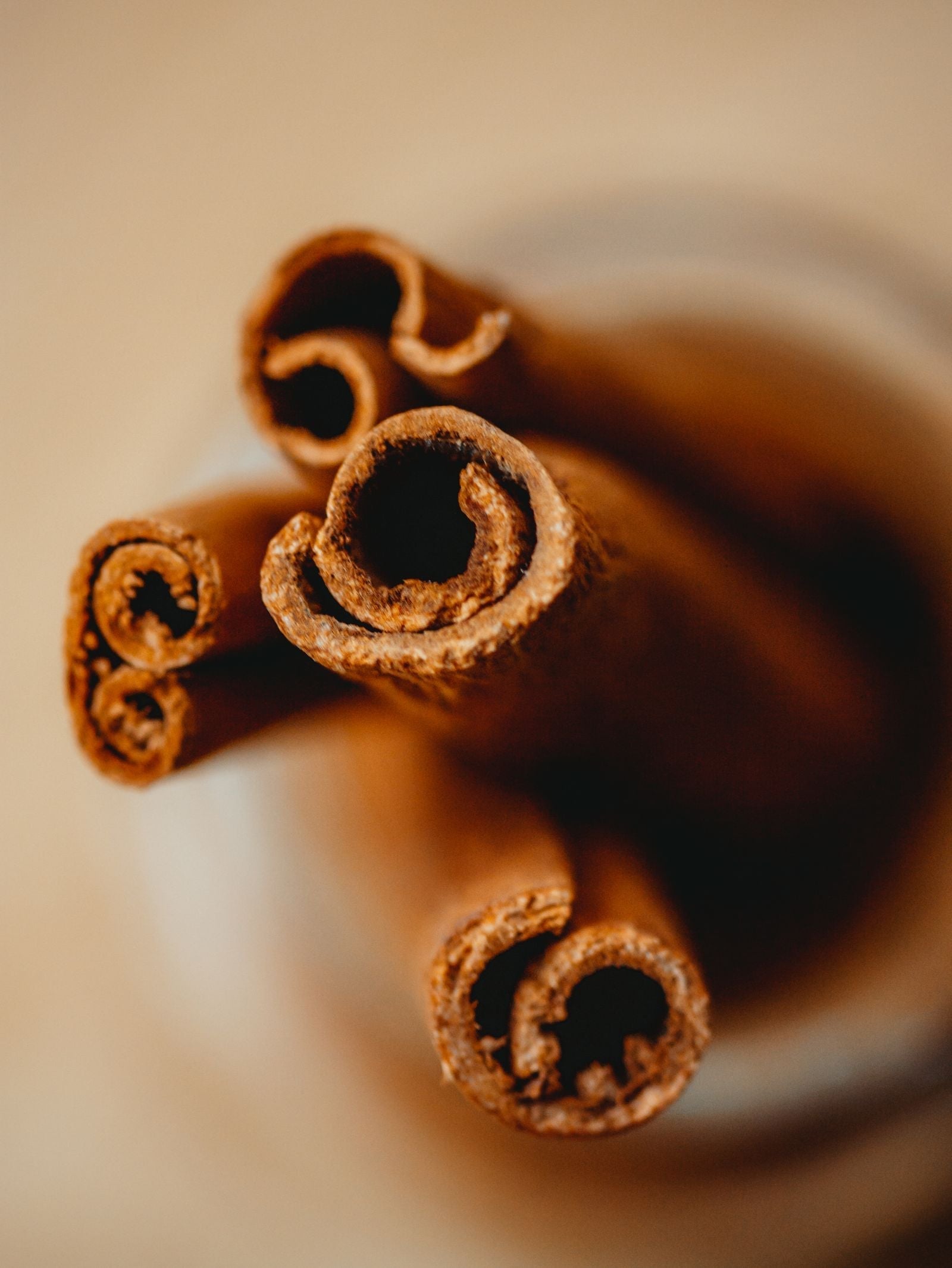
- If you have whole sticks, look at the bark. Ceylon quills are tan-brown, smooth and made of tight, thin layers rolled together. Cassia is darker, reddish-brown, in thicker double-sided rolls with a hollow center and a lumpier, tougher texture.1
- Taste it. Compared with Ceylon, Cassia has a much stronger pungency.1 That is an indicator, not proof.
- Be skeptical of the iodine test for powder. The popular kitchen trick of adding iodine to a cinnamon-and-water mixture assumes only Cassia is high in starch. The study above describes both species as containing a lot of starch grains, so at best the test is a rough kitchen indicator. Once the bark is ground, the same paper says it is very difficult to tell the species apart without microscopic identification.1 Our 3-checks guide goes into this in more detail.
Because powder is so hard to check yourself, the practical answer is to buy from a seller that names the species, names the origin, and is open about what it tests and what it has not tested yet.
Where is true cinnamon grown?
Sri Lanka is the country that supplies true Ceylon cinnamon to the world market. The Ceylon cinnamon export trade is mainly quills and cut quills.1 Sri Lanka's cinnamon trade is old; the same study notes it dates back to the 14th century AD.1
True cinnamon powder, single-origin Sri Lanka
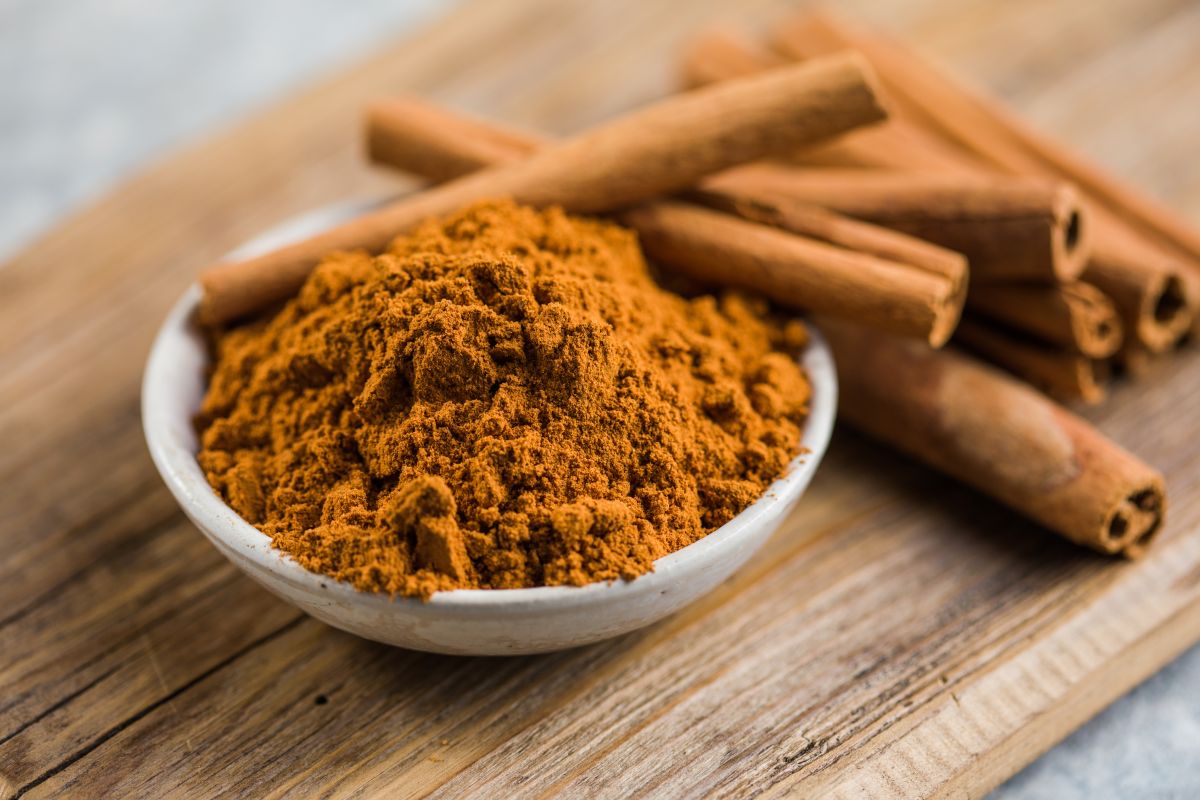
Our Ceylon Cinnamon Powder is Cinnamomum verum from single-origin Sri Lanka, in a 1 lb pouch. It is USDA Organic, Fair Trade Certified and GMO Free, with a Geographical Indication (GI) certificate for Ceylon cinnamon. It is produced and packed at origin in Sri Lanka; RamanRasa is a certified handler and stores pouches in a USDA-certified facility in Houston, Texas. We sell powder only, not sticks.
It is currently sold out. The next batch arrives in Houston on October 17, 2026, and you can join the restock list on the product page. Independent per-batch third-party testing is planned for every batch, with results published once each batch is in our Houston facility.
FAQ
What is true cinnamon?
True cinnamon is Ceylon cinnamon, the inner bark of Cinnamomum verum, supplied by Sri Lanka. The other common cinnamons, Cassia, Saigon and Indonesian, are different species.1
Is "true cinnamon powder" the same as Ceylon cinnamon powder?
Yes, the two names refer to the same species when the product really is Cinnamomum verum. Because US labels may say only "cinnamon," look for "Ceylon" or the species name on the package.5
Is Cassia cinnamon bad?
BfR recommends moderate consumption of Cassia cinnamon and says a health risk would only be possible for people who eat large quantities of high-coumarin Cassia over a relatively long period.3 It is the species most grocery-store cinnamon comes from, and it is a different product from true cinnamon.
Does organic cinnamon mean it is true cinnamon?
No. Organic certification covers how a crop was grown and handled, not which species it is. Cassia can be certified organic and still be Cassia.
Where can I buy true cinnamon powder?
Ours is sold out until the next batch arrives in Houston on October 17, 2026. You can join the restock list on the Ceylon Cinnamon Powder page.
This content is for informational purposes only and not medical advice. Consult a healthcare professional for health-related concerns.
Know Your Cinnamon: related reading
- Know Your Cinnamon: the full picture in one place, covering labeling, coumarin, lead, and how to check what is in your jar
- Ceylon Cinnamon guide: what real cinnamon tastes like and how to use it
- Ceylon vs. Cassia Cinnamon: What's Actually in Your Spice Pouch?: the two species side by side
- What Is Coumarin in Cinnamon?: the published numbers behind the species difference
- How to Tell If Your Cinnamon Is Ceylon or Cassia: three practical checks
- Ceylon Cinnamon Sticks vs Powder: which form to buy
Sources
- Clean vs Dirty Labels: Transparency and Authenticity of the Labels of Ceylon Cinnamon, PLOS ONE via PMC (international dataset, not US-only)
- Blahova & Svobodova, Assessment of Coumarin Levels in Ground Cinnamon Available in the Czech Retail Market, The Scientific World Journal, 2012 (Czech data, not US)
- Cassia cinnamon with high coumarin contents to be consumed in moderation, German Federal Institute for Risk Assessment (BfR), September 27, 2012
- FAQ on coumarin in cinnamon and other foods, German Federal Institute for Risk Assessment (BfR)
- 21 CFR 101.22, Foods; labeling of spices, flavorings, colorings and chemical preservatives, Electronic Code of Federal Regulations