Cart
0
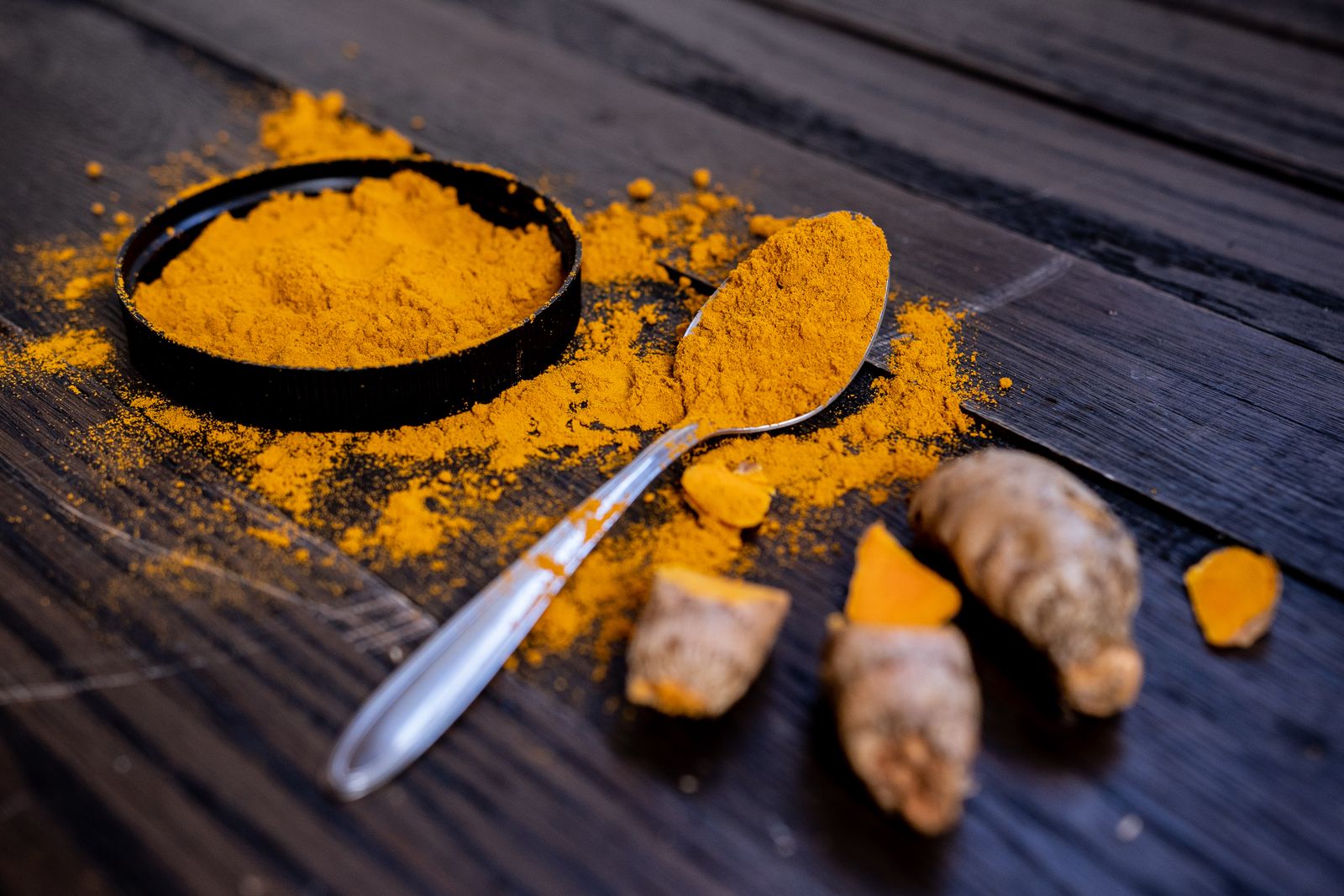
For most dishes that serve four, start with 1/2 to 1 teaspoon of ground turmeric. Cook it in the hot oil or ghee until it smells fragrant, usually 30 seconds to a minute or two, before any liquid goes in.1 That short fry is what gets rid of the flat, musty taste of raw spice powder. If the finished dish tastes bitter, there is usually too much turmeric in it, so add more only after you have tasted.
Key facts
- Turmeric comes from the rhizome (underground stem) of a plant in the ginger family. Curcumin is the compound that gives the spice its yellow color.2
- A teaspoon of ground turmeric weighs about 3 grams, and a tablespoon about 9.4 grams.3
- Many of the flavor compounds in spices dissolve in fat, which is why cooks fry ground spices briefly in oil before adding liquid. Ground spices also burn quickly.1
- A rice recipe published by the University of Kentucky (adapted from NYT Cooking) uses 1 teaspoon of ground turmeric for 2 cups of uncooked rice and serves four. That is about 1/2 teaspoon per cup of rice.4
- About 1 inch of fresh turmeric root equals 1 tablespoon grated, or 1 teaspoon ground.5
How much ground turmeric should you use?
Ground turmeric tastes earthy and slightly bitter, with a little gingery heat.6 A little reads as background warmth. Too much tastes bitter, and you cannot take it back out, so the amounts below are starting points for a dish that serves about four.
The rice and dal rows come from published recipes. The other rows are general cooking guidance; adjust them to taste.
| Dish (serves about 4) | Ground turmeric to start | When it goes in |
|---|---|---|
| Rice, 2 cups uncooked | 1 tsp (about 1/2 tsp per cup of rice)4 | In the hot oil with the aromatics, before the rice and water |
| Red lentil dal, 1 cup lentils | 1/2 tsp (from our Sri Lankan dal recipe) | With the lentils and water at the start; the tempering adds the fat at the end |
| Curry or braise (general guidance) | 1/2 to 1 tsp | In the oil once the onions have softened, before tomatoes or liquid |
| Pot of soup or stew (general guidance) | 1/2 tsp | With the onions in the fat, before the stock |
| Sheet pan of roasted vegetables (general guidance) | 1/2 to 1 tsp | Tossed with the oil and salt before roasting |
| Scrambled eggs, 4 eggs (general guidance) | 1/8 to 1/4 tsp | Into the melted butter just before the eggs |
If a recipe gives turmeric in grams, a teaspoon is about 3 g.3 Published recipes vary a lot, so try the low end of each range first and go up next time.
When to add turmeric: bloom it in oil or ghee
Many of the flavor compounds in spices are fat-soluble, and a short spell in hot fat before any liquid goes in brings them out. Cooks call this blooming. America's Test Kitchen notes that powdered spices stirred straight into a pot tend to give a bland, musty result.1
- Heat the oil, ghee or butter over medium heat and soften any onion, garlic or ginger first.
- Stir in the turmeric with any other ground spices.
- Keep stirring until the spices smell fragrant, usually 30 seconds to a minute or two.1
- Add the liquid, rice or vegetables straight away.
Watch the heat. Ground spices burn quickly, and a scorched spice carries its burnt taste into the finished dish.1 If the turmeric turns brown and smells acrid, wipe out the pan and start the fat again.
Soupy dishes such as dal work a little differently. In our parippu recipe the turmeric simmers with the lentils from the start, and the fat arrives at the end in a tempering of mustard seeds, cumin, curry leaves and shallot fried in oil. The turmeric still gets a long cook, and it meets fat before the dal is served.
Turmeric stirred straight into a finished sauce at the very end tastes raw. If a dish needs more near the end, warm the extra turmeric in a spoonful of oil in a small pan until fragrant, about 30 seconds, then stir that in.
Why does turmeric taste bitter, and how do you fix it?
Usually there is too much of it, it never met hot fat, or it scorched.
- If there is too much, you can only dilute it. Add more of the base: rice, lentils, stock, vegetables or coconut milk.
- If it tastes raw, simmer it a few minutes longer, or stir in a spoonful of hot oil or ghee.
- If it scorched, there is no rescue. Start the fat again if you catch it early.
Check the salt next. Taste research has shown that salt dampens bitter tastes more than it dampens pleasant ones such as sweetness.7 The research looked at bitterness in general, with no turmeric involved, but it is a good reason to season properly before you decide a dish is too bitter. After salt, a spoonful of butter, ghee or coconut milk and a squeeze of lemon or lime will round off what is left.
Colour and flavor are two separate things
Curcumin is what makes turmeric yellow.2 A small amount colors a whole pot, and the color shows up long before the flavor does. That is an easy way to end up with a bitter dish: the rice looks pale, so another spoonful goes in.
The cooking medium changes the shade. Turmeric added to the cooking water turns rice and pasta bright yellow, while turmeric in the oil or butter gives chicken and seafood a warmer orange color.5 For a deeper color, cook the turmeric in the fat.
Can you just sprinkle turmeric on food?
Yes. Ground turmeric is a dried spice and can be eaten without cooking. Raw, it tastes dusty and a little bitter, because nothing has carried its flavor into fat. If you sprinkle it, use a pinch and put it with something rich: butter on eggs, olive oil in a dressing, yogurt in a dip.
For raw uses, fresh root is worth trying. In a side-by-side tasting, America's Test Kitchen found fresh turmeric brought brightness to a smoothie but was hard to tell apart from dried once it had been heated in a pilaf or pickles.6
Fresh turmeric vs ground: how to swap them
The University of Florida's extension service gives a general rule: about 1 inch of fresh turmeric equals 1 tablespoon of freshly grated turmeric, or 1 teaspoon of ground turmeric.5 America's Test Kitchen used the same proportion, 3 parts fresh to 1 part dried, when it compared the two.6
- Recipe says 1 teaspoon ground: use 1 tablespoon grated fresh root.
- Recipe says 1 tablespoon grated fresh: use 1 teaspoon ground.
Roots vary in size and moisture, so taste as you go. A spoon scrapes off the thin skin and a rasp grater does the rest.6 Fresh root keeps three to four weeks in the fridge in an airtight container or zipper-lock bag,6 and it also freezes well. You can grate it straight from frozen.5
What goes well with turmeric
Turmeric sits well with onion, garlic, ginger, cumin, coriander, mustard seed, curry leaves, coconut milk and lemon. Black pepper is the classic partner in a lot of turmeric cooking, usually ground in toward the end for its heat and aroma. Our article on why the two are paired covers the absorption question.
Turmeric stains, and how to deal with them
The pigment that colors a curry also stains hands, counters and anything else it touches, especially when you cut fresh root.5 A few habits keep it under control:
- Wipe spills straight away with warm water and dish soap, before they dry.
- Mix turmeric in glass, metal or ceramic bowls. Pale plastic and wooden boards take the color and keep it.
- Wear thin gloves when you grate fresh root.
- For clothes, rinse the back of the stain under cold running water, work in dish soap or a laundry stain remover, and check the spot is gone before the garment goes in the dryer, since heat can set it.
How to store ground turmeric
Keep it airtight in a dry cupboard away from sunlight and the heat of the stove. NDSU Extension puts ground spices at two to three years and suggests checking the aroma and replacing the jar when it has faded.8 Our turmeric guide covers the spice itself in more depth.
About our turmeric
We sell turmeric powder, so we have an interest here. This guide works with any plain ground turmeric. Ours is single-origin Sri Lankan turmeric, packed at origin and shipped from our Houston facility. It is USDA Organic (certified by CCOF), Fair Trade Certified and GMO Free.
FAQ
Can I just sprinkle turmeric on my food?
Yes, ground turmeric can be eaten without cooking. It tastes better warmed in a little fat first, so if you sprinkle it raw, use a pinch with something rich such as buttered eggs, a dressing or yogurt.
How much ground turmeric equals fresh turmeric?
About 1 teaspoon of ground turmeric equals 1 tablespoon of grated fresh root, or roughly a 1-inch piece.5 Roots vary, so taste and adjust.
Do you add turmeric at the beginning or the end of cooking?
Near the beginning. Stir it into the hot oil or ghee after the onions and before any liquid, and cook it until fragrant. Added at the very end, it tastes raw.
How do I get turmeric stains out?
Wipe hard surfaces right away with warm soapy water. For fabric, rinse from the back under cold water, work in dish soap or stain remover, and keep it out of the dryer until the stain has gone.
Last reviewed October 26, 2026. Amounts marked as general guidance are cooking starting points, not tested measurements.
Turmeric: related reading
- Turmeric guide: our hub page on the spice and where ours comes from.
- Why is black pepper added to turmeric?: the absorption question, which this guide leaves alone.
- Sri Lankan moringa dal (parippu): red lentils with turmeric simmered in from the start and a tempering at the end.
- Golden turmeric rice: turmeric bloomed in oil or ghee before the rice goes in.
- Black Pepper: our whole peppercorns, for grinding over a turmeric dish.
Sources
- America's Test Kitchen, "How to Bloom Spices" (October 31, 2023)
- National Center for Complementary and Integrative Health (NIH), "Turmeric" (last updated April 2025)
- USDA FoodData Central, "Spices, turmeric, ground" (SR Legacy, FDC ID 172231), portion weights
- University of Kentucky, "One-Pot Turmeric Coconut Rice" (adapted from NYT Cooking; serves 4)
- University of Florida IFAS Extension, Gardening Solutions, "Turmeric"
- Cook's Illustrated (America's Test Kitchen), "Tasting Ground Turmeric" (2018)
- Breslin and Beauchamp, "Salt enhances flavour by suppressing bitterness", Nature 387:563 (1997)
- NDSU Extension, "Food Storage Guide Answers the Question..." (spices and herbs)