Cart
0
Key facts
- Moringa powder is used across South Asian, Filipino, and West African cooking — it's a pantry staple in those cuisines, not a Western wellness invention.
- It works in three categories beyond smoothies: stirred into savory dishes after the heat is off, baked into batters, and steeped as a tea.
- The one trick that matters across almost every savory use: add it at the very end of cooking, off the heat or on very low heat — that's what keeps its color bright green and its flavor mild rather than bitter.
- Already have our banana and mango moringa smoothie on repeat? These five are for the days you want something that isn't a drink.
If moringa powder has only ever gone into a smoothie in your kitchen, you're using about a fifth of what it's actually good for. It's a genuine pantry ingredient in the cuisines it comes from — stirred into lentils, baked into bread, steeped as tea — and it behaves differently in each of those contexts. Here are five ways to use it, including one full recipe.
The one rule that applies almost everywhere
Moringa powder is heat-sensitive in a practical sense: cooked hard and long, it turns from bright green to a duller olive and its flavor shifts from mild-grassy to noticeably more bitter. The fix used across most of these recipes is the same — stir it in at the very end, off the heat or on the lowest possible heat, rather than cooking it from the start. That single habit is the difference between a dish where moringa disappears into the background and one where it announces itself.
1. Stirred into lentil soup or dal
This is moringa's most traditional savory use — moringa leaves themselves are a common addition to South Asian and West African soups and stews. With the powder, the technique is the same: cook your lentil soup, curry, or vegetable stew as normal, then stir in 1–2 teaspoons per serving right at the end, off the heat. It blends into tomato- or coconut-based sauces almost invisibly, adding color and a mild earthiness without announcing itself. A dal finished with moringa and a pinch of turmeric and fresh-cracked black pepper is about as Sri Lankan a weeknight dish as it gets.
2. Baked into muffins or banana bread
Add 1 teaspoon of moringa powder per serving directly into muffin or quick-bread batter before baking — it behaves like a mild-flavored flour additive rather than a spice, so it doesn't compete with cinnamon, vanilla, or banana. Start with a small amount (a teaspoon in a standard muffin recipe) and adjust; too much will tint the crumb visibly green, which is a fine look for some bakes and not for others.
3. Whisked into salad dressing
Whisk ½–1 teaspoon into a standard oil-and-acid dressing (olive oil, lemon or vinegar, a little mustard) and pour over greens. No heat involved at all here, so none of the color or flavor drift applies — this is the lowest-effort way to try moringa if you haven't yet.
4. As a warm "golden-green" tea
Whisk ½ teaspoon into hot (not boiling) water or warm milk the way you would matcha, with a little honey if you want it. Boiling water is the one thing to avoid here — the same heat-sensitivity that applies to cooking applies to steeping, so let water cool slightly off the boil first.
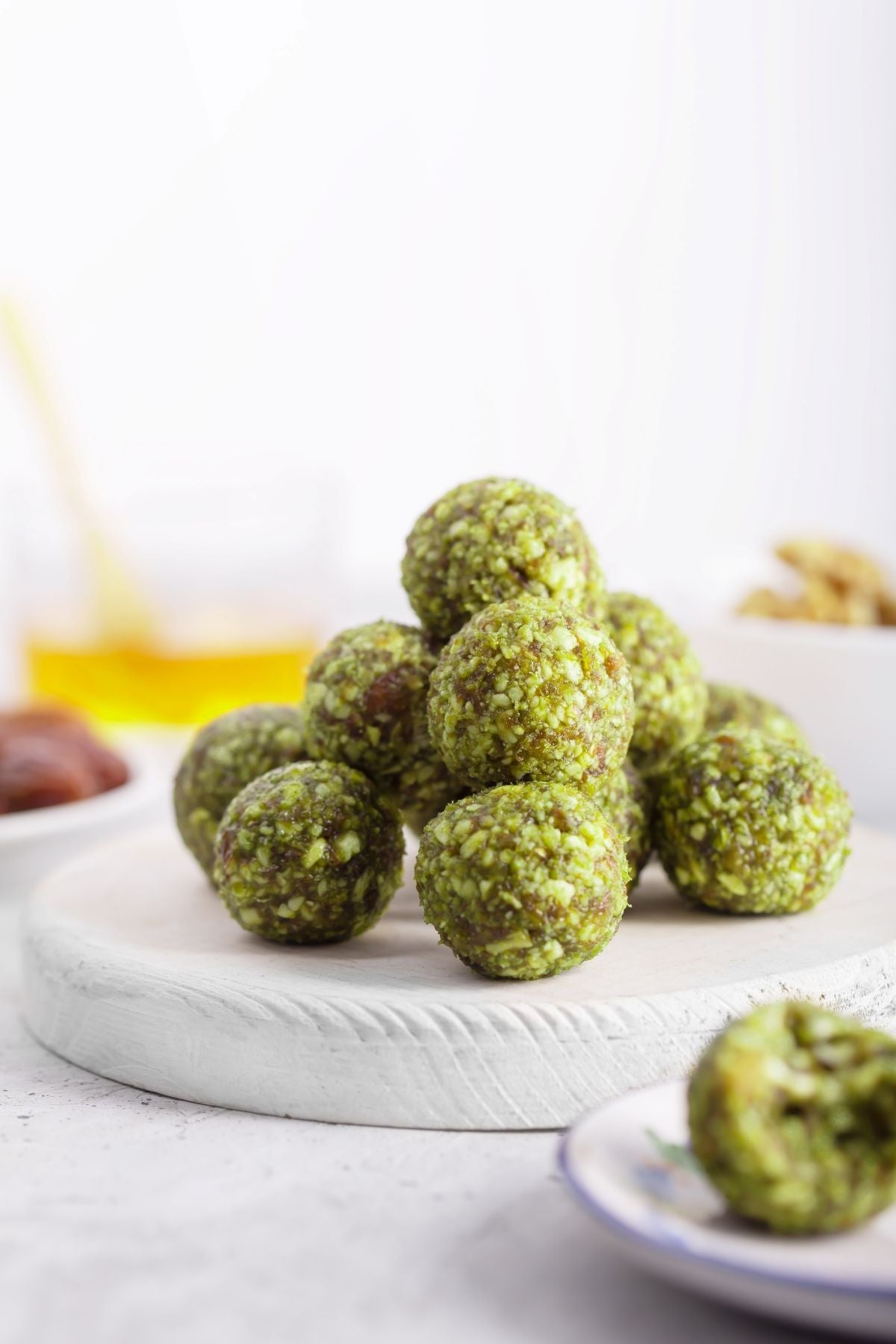
5. Moringa energy bites (full recipe)
The one fully no-bake, no-cook recipe on this list — heat-sensitivity isn't a concern at all since nothing gets warmed.
Moringa Energy Bites — makes about 12
Ingredients
- 1 cup pitted dates, soaked 10 minutes in warm water if firm
- 1 cup rolled oats
- 2 tablespoons Organic Moringa Leaf Powder
- 2 tablespoons nut butter (almond or peanut)
- 1 tablespoon honey or maple syrup
- Pinch of salt
Instructions
- Drain the dates and add them to a food processor with the oats, moringa powder, nut butter, honey, and salt.
- Pulse until the mixture forms a sticky, coarse dough that holds together when pressed — about 1–2 minutes, scraping down the sides once.
- Roll into 12 balls, about 1 tablespoon each.
- Refrigerate for at least 30 minutes to firm up. Store in an airtight container in the fridge for up to a week.
The moringa in these recipes
Single-origin moringa leaf powder from Sri Lanka, dried and milled at origin. USDA Organic, Fair Trade Certified, GMO Free. Just the leaf.
FAQ
Does cooking destroy moringa's nutrients?
We're not going to put a specific number on nutrient loss here without a lab test behind it — that's not a claim we can back up. What we can say is the practical, widely-used kitchen habit: add moringa at the end of cooking rather than the start, which keeps its color and flavor at their best regardless of the exact nutritional picture.
How much moringa powder should I use per serving?
Most of the recipes above use ½ to 2 teaspoons per serving. Start at the low end, especially in baking, since moringa's flavor and green tint both become more noticeable as you add more.
Can I use moringa powder in hot dishes at all?
Yes — the trick is timing, not avoidance. Stir it in off the heat or on very low heat at the end of cooking, rather than simmering or boiling it for an extended time.
What does moringa powder taste like on its own?
Mild and slightly grassy, closer to matcha or a mild green tea than to a strong herb. That's why it disappears easily into smoothies, dressings, and lentil dishes rather than dominating them.