Why this page exists
In the US, a label that just says "cinnamon" can legally be either of two unrelated plants — and the one most jars actually contain runs roughly 50× higher, gram for gram, in a compound regulators track for liver safety. That's not a rumor. It's a documented gap in federal labeling law, backed by peer-reviewed testing, and it's the reason we wrote the articles below.
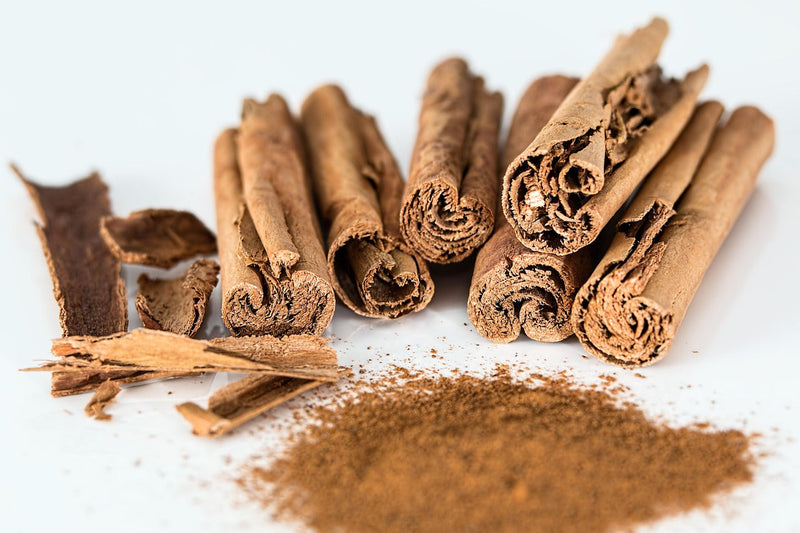
Most people have never had a reason to ask what species is in their cinnamon jar, because nothing on the label tells them there are two. Cinnamomum verum — Ceylon cinnamon, grown almost exclusively in Sri Lanka — and Cinnamomum cassia — grown at scale in China, Vietnam and Indonesia — are different plants with different chemistry. US federal regulation (21 CFR § 101.22) lets both be sold under the single word "cinnamon," with no requirement to disclose which one is in the jar. That's not illegal, and it's not a conspiracy. It's a labeling rule written before this distinction mattered to shoppers, and it's still in force.
We sell Ceylon cinnamon, so we have an obvious interest in this conversation. That's exactly why we've tried to write about it the way we'd want a stranger to: with citations, with the limits of the data stated plainly, and without pretending a real difference is bigger than it is. Every claim below links to its source — a federal regulation, a peer-reviewed study, a regulator's own published limit, or independent lab testing. Where we don't have our own batch data yet, we say so.
Start here: the labeling gap
The chemistry: why species is the variable that matters
-
Coumarin in Cinnamon: What Published Testing Actually Shows — the actual lab numbers: a peer-reviewed test of 60 retail Cassia samples averaged roughly 3,856 mg/kg of coumarin; Ceylon, tested the same way, came back below detection. We run the math against Germany's and the EU's own published safety limits.
A separate question: lead and heavy metals
This is the part worth being precise about, because it gets conflated with the species question constantly — including, sometimes, by people selling Ceylon cinnamon. Lead contamination is a soil-and-supply-chain issue, not a species issue. Choosing Ceylon addresses coumarin. It says nothing on its own about lead.
What we're doing about it
Certifications and category-wide surveys can't tell you what's in the specific bag on your shelf — only a test of that batch can. That's what we built Open-Batch to close: independent, third-party lab verification tied to a QR code on the pouch, not a one-time brand claim. It isn't fully live across every current batch yet, and we'd rather say that plainly than claim it's finished before it is.
See our single-origin Ceylon cinnamon — sourced from partner farms in Sri Lanka's Kandy and Matale districts, the species tested at non-detectable coumarin levels in the research above.
Further reading
This content is for informational purposes only and not medical advice. Consult a healthcare professional for health-related concerns.