Cart
0

Key facts
- Clove's aroma and flavor come mainly from eugenol, a volatile oil that evaporates over time — fastest once the clove is broken or ground.1
- Ground cloves lose noticeably more potency than whole cloves over the same storage period, because grinding exposes far more surface area to air.2
- Heat, light, and moisture all accelerate the loss — a cool, dark, airtight container is the single biggest lever you control.2
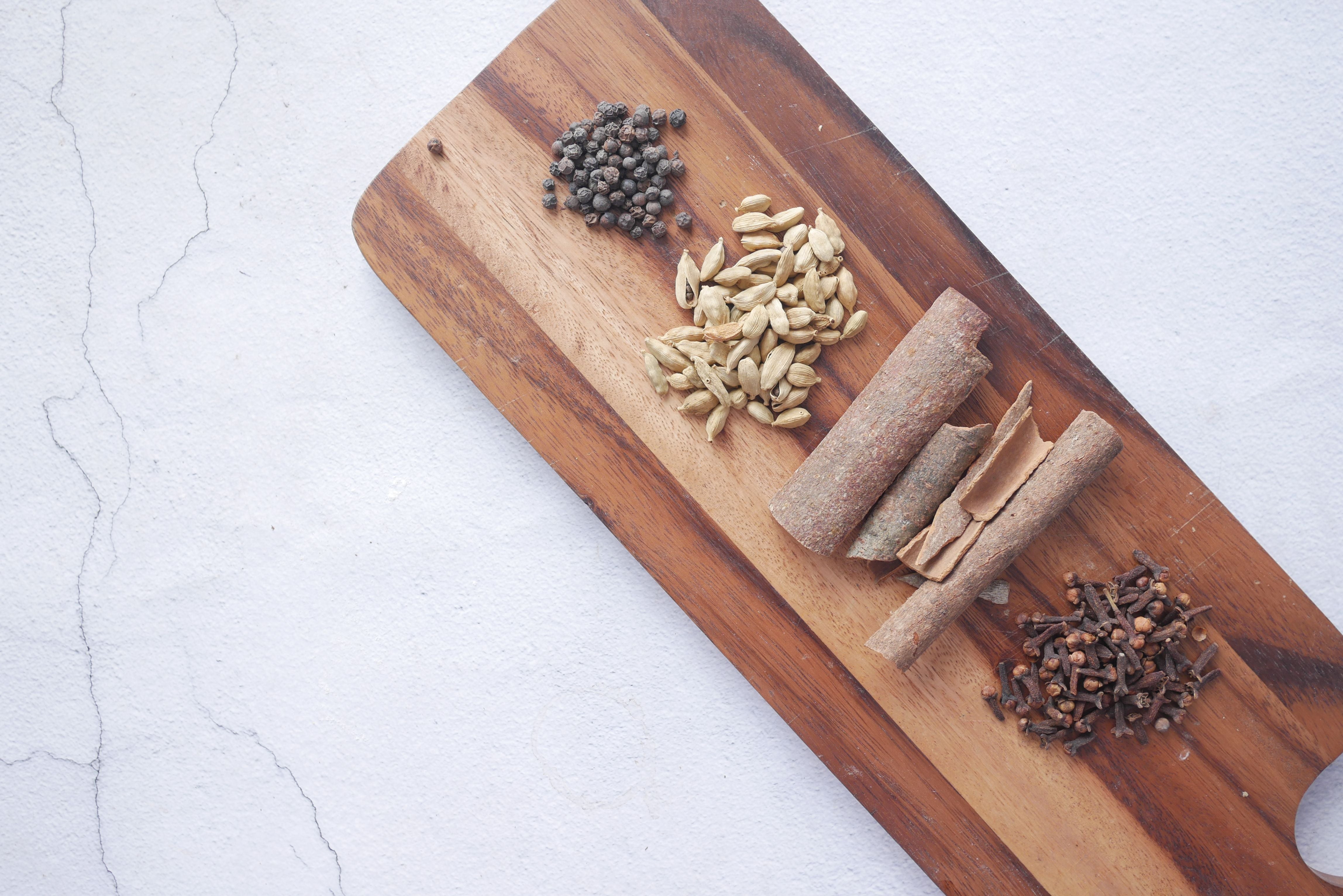
Cloves have one of the most recognizable smells in the spice cabinet — warm, sweet, a little medicinal. That smell is doing double duty: it's also a countdown clock. Unlike a spice such as coriander seed, which stays reasonably stable for years, cloves are a volatile-oil-driven spice, and volatile oils are, by definition, the ones that leave the jar first.
What's actually escaping
The compound responsible for clove's flavor and scent is eugenol, an aromatic oil that makes up a large share of clove's essential oil content.1 Eugenol is volatile by nature — the same property that makes it smell strong from across a kitchen is the property that lets it evaporate steadily out of an open or poorly sealed container. This isn't spoilage in the food-safety sense; a year-old clove won't make you sick. It just won't taste like much.
Whole vs. ground: why the difference is bigger than it seems
The USDA's Food Safety and Inspection Service notes that ground spices generally lose their strength faster than whole spices, because grinding breaks open the plant's oil-bearing cells and dramatically increases the surface area exposed to air.2 With whole cloves, the oil stays largely sealed inside the bud until you crush or grind it — which is why buying whole and grinding a small amount as needed keeps a jar tasting fresher for longer than buying pre-ground.
Four habits that actually extend shelf life
- Keep them whole until use. Grind only what a recipe calls for.
- Store airtight. Every time a jar is left open or a bag isn't fully sealed, more eugenol escapes.
- Keep them cool and dark. A cabinet away from the stove and out of direct sunlight beats a spice rack mounted next to the oven — heat and light both accelerate volatile-oil loss.2
- Buy what you'll use in 6–12 months. Whole cloves don't "go bad," but their potency curve is real — a large discount jar that sits for two years will taste noticeably flatter than a smaller, fresher batch.
How to tell if a jar has faded
Break one clove in half and smell the broken surface immediately. If the aroma is faint or the clove feels dry and brittle rather than slightly oily, it's past its peak — still safe, just weaker. Fresh whole cloves should smell strong within a second or two of breaking.
FAQ
Do cloves ever actually go bad?
Properly dried whole cloves stored airtight rarely spoil in the food-safety sense — the risk is flavor loss, not contamination.
Should I store cloves in the fridge?
Refrigeration isn't necessary and can introduce moisture through condensation when the container is opened and closed. A cool, dark pantry cabinet in an airtight jar is the standard recommendation.
How long do whole cloves keep their potency?
Most sources place peak potency within the first 1–2 years for whole spices stored properly, with a gradual, not sudden, decline after that.2